
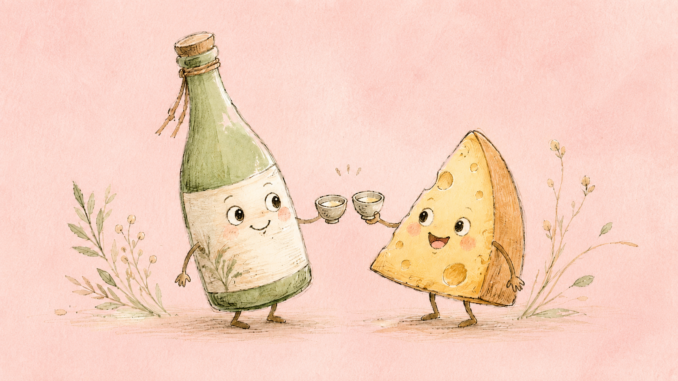
When we think about sake, sushi is usually the first pairing that comes to mind. Yet sake’s remarkable range of styles makes it far more versatile at the table than this familiar association suggests. Depending on how it is made, matured and served, sake may show aromas and flavours ranging from delicate fruit and white flowers to toasted nuts, caramel and earthy umami, qualities that can make it an exceptional partner for one of Europe’s greatest pleasures: cheese.
The combination may seem unexpected at first, but sake and cheese have more in common than one might expect. Both are shaped by fermentation, both can develop pronounced savoury and umami characteristics, and both offer a broad spectrum of textures, flavours and levels of maturity.
Together, they create a pairing that feels both reassuringly familiar and genuinely new, offering a fresh way to explore balance, texture and flavour.
Why sake can work so well with cheese
Sake and cheese can form successful pairings because both products often contain significant savoury and umami characteristics. However, compatibility depends on the style and intensity of each component.
Compared with many wines, sake generally contains little or no tannin and has moderate rather than pronounced acidity. This can reduce the risk of bitterness or astringency when it is paired with salty, creamy or protein-rich foods.
Some sake styles also have residual sweetness, a rounded texture or pronounced lactic notes. These characteristics may balance the saltiness of cheese, complement its creamy texture or create a link with its fermentation-derived flavours.
When building a pairing, consider the following principles:
- Match the intensity of the sake with the intensity of the cheese.
- Use acidity or carbonation to refresh the palate after rich, creamy cheeses.
- Use sweetness to balance saltiness, bitterness or pungency.
- Pair nutty, lactic, earthy or savoury flavours through similarity.
- Use contrasting fruit or floral aromas to add freshness.
- Consider serving temperature, as warming sake may increase the perception of body, umami and savoury character.
A successful pairing should feel balanced, with neither the sake nor the cheese dominating the other.
Five sake and cheese pairings to try
There is no single formula for pairing sake with cheese. The key is to assess intensity, texture, sweetness, acidity and aromatic profile.
1. Fresh and soft unripened cheese with sparkling sake
Fresh cheeses are usually high in moisture, light to medium in flavour intensity and soft in texture. Goat cheese may also have noticeable acidity and a distinctive tangy character.
A sparkling sake with a light body, refreshing acidity and low to medium sweetness can create balance through contrast. The carbonation refreshes the palate, while a small amount of sweetness may soften the cheese’s acidity.
Try it with:
- Fresh chèvre
- Ricotta
- Burrata
- Cream cheese
- Fresh cow’s milk cheese
Choose a sparkling sake that is crisp rather than strongly sweet. A delicate, lower-alcohol style can work particularly well as an aperitif or as the first pairing in a structured tasting.
The pairing is likely to be most successful when the sake and cheese are similar in flavour intensity. A very aromatic or sweet sparkling sake may overwhelm a delicate fresh cheese.
2. Brie or Camembert with Junmai Ginjo
Young Brie and Camembert are generally medium in flavour intensity, with high fat, soft textures and flavours of cream, butter and fresh mushroom.
A Junmai Ginjo with medium aromatic intensity, moderate acidity and a smooth texture can complement these cheeses without overwhelming them. Fruity aromas such as pear, apple or melon provide contrast, while subtle lactic, cereal or savoury notes may create a complementary link.
A ripe Brie may reveal flavours of butter, hazelnut and mushroom alongside the sake’s fruit and floral character.
Serve the sake slightly chilled rather than ice-cold so that its aromas remain expressive.
Very ripe or strongly mushroomy cheeses may require a fuller-bodied Junmai, Kimoto or Yamahai rather than a delicate Ginjo style. As the cheese develops greater intensity, the sake should also become more structured.
Try it with:
- Brie
- Camembert
- Brillat-Savarin
- Coulommiers
- Soft bloomy-rind cheeses
3. Blue cheese with aromatic or gently sweet sake
Blue cheeses are generally high in salt, high in flavour intensity and creamy or crumbly in texture. They may also show spicy, bitter or pungent characteristics.
A sake with noticeable sweetness can balance saltiness and soften bitter or sharply flavoured elements. Nigori, Kijoshu or another medium-sweet style may therefore be more reliable than a delicate dry sake.
Aromatic Ginjo or Daiginjo styles may work with milder blue cheeses, but powerful examples such as Roquefort or Cabrales usually require greater sweetness, body and flavour concentration.
Try it with:
- Gorgonzola Dolce with aromatic Ginjo or lightly sweet Nigori
- Stilton with full-bodied Junmai or medium-sweet Kijoshu
- Roquefort with a richer, sweeter sake
- Cabrales with a full-bodied, concentrated style
For an additional layer of flavour, serve the cheese with a small amount of pear, fig or honey. These ingredients can reinforce the contrast between saltiness and sweetness without obscuring the main pairing.
4. Aged hard cheese with mature sake
As hard cheeses mature, they lose moisture and become firmer, more concentrated and often saltier. Their flavours may develop towards toasted nuts, caramel, dried herbs, savoury stock and spice.
Mature sake, often referred to as Koshu, may undergo a comparable aromatic evolution. Rather than the fresh fruit character found in younger sake, aged examples can show notes of toasted nuts, dried fruit, soy, caramel, spice and umami.
This creates a complementary pairing based on flavour similarity. The sake should have sufficient body, flavour intensity and persistence to match the concentration of the cheese.
Try it with:
- Aged Gouda
- Comté
- Aged Swiss Gruyère
- Parmesan
- Mature Cheddar
- Manchego Curado
Aged Swiss Gruyère with Koshu
Aged Swiss Gruyère is a particularly compelling pairing, especially when matured for approximately 12 to 24 months.
With extended maturation, Gruyère develops greater flavour intensity and a firmer, sometimes slightly granular texture. Typical flavours may include toasted hazelnut, browned butter, caramel, dried herbs and savoury broth.
These characteristics can complement the oxidative, nutty and umami-rich profile of a mature Koshu. A medium- to full-bodied example with a long finish is likely to match the cheese most effectively.
For a less oxidative pairing, try aged Gruyère with a full-bodied Junmai served at room temperature or gently warmed. The sake’s rounded texture and savoury character can soften the perception of saltiness while preserving the cheese’s intensity.
A structured Kimoto or Yamahai can also be successful, particularly when the Gruyère shows pronounced savoury, lactic or earthy characteristics.
This is one of the richest pairings on the board, so it is best served towards the end of the tasting.
5. Truffle cheese or washed-rind cheese with Kimoto or Yamahai sake
Kimoto and Yamahai sake often have medium to full body, relatively firm acidity and pronounced lactic, cereal, earthy or savoury characteristics.
These qualities can complement cheeses with similarly intense fermentation-derived aromas.
With truffle cheese, the pairing is primarily based on complementary earthy and umami flavours. With washed-rind cheese, matching flavour intensity is especially important. A delicate sake may be overwhelmed by cheeses such as Époisses or mature Munster.
Try it with:
- Truffle Brie
- Truffle Pecorino
- Taleggio
- Époisses
- Munster
- Livarot
Serving temperature can significantly change the pairing. Compare the sake at room temperature and gently warmed, for example between approximately 35°C and 45°C.
Warming may increase the perception of body, umami and savoury character, making the pairing feel rounder and more integrated. However, it may also reduce the prominence of delicate fruit aromas.
How to create a Sake and Cheese tasting at home
You do not need a large collection of bottles to explore this pairing. Three contrasting sakes and four or five cheeses are enough to create a structured and memorable tasting.
Begin with the lightest and freshest styles before moving towards richer, sweeter, more mature or more savoury combinations.
A simple progression could be:
- Sparkling sake with fresh goat cheese
- Junmai Ginjo with young Brie
- Medium-sweet Nigori or Kijoshu with blue cheese
- Koshu with 18-month Swiss Gruyère
- Kimoto or Yamahai with Taleggio or another washed-rind cheese
This sequence moves from light and refreshing to aromatic, sweet-salty, mature and intensely savoury.
Pour small servings and taste each combination more than once. Begin by tasting the sake on its own, then the cheese, and finally both together.
How to assess each pairing
For a more systematic tasting, evaluate each combination according to five criteria.
Intensity
Does one component dominate the other?
A delicate Ginjo may disappear beside a powerful blue cheese, while an intense mature sake may overwhelm a fresh ricotta.
Balance
Does the sake reduce or increase the perception of saltiness, acidity, sweetness or bitterness?
A successful pairing should create balance rather than exaggerating an unpleasant characteristic.
Texture
Does the combination feel fresher, creamier, heavier or more drying?
Carbonation may refresh the palate after a creamy cheese, while a full-bodied sake may make a rich cheese feel even broader and more mouth-coating.
Flavour interaction
Are the aromas complementary or contrasting?
A pairing based on similarity may connect nutty, lactic or savoury flavours. A contrasting pairing may use fruit, sweetness or freshness to balance a salty or pungent cheese.
Finish
Does the combination increase complexity and length, or does it create an unpleasant aftertaste?
The best pairings often extend the finish and reveal flavours that were less obvious when the sake and cheese were tasted separately.
Practical serving tips
Use neutral crackers or bread to refresh the palate between pairings. Water should also be available throughout the tasting.
Fresh pear, apple, grapes and unsalted nuts can complement the board without distracting from the main flavours. Avoid heavily seasoned chutneys, strongly flavoured crackers or excessive amounts of honey, as these may make it more difficult to assess the sake and cheese accurately.
Serve cheese cool rather than directly from the refrigerator. Allowing it to warm slightly can improve its texture and aromatic expression.
Sake should also be served at a temperature appropriate to its style. Sparkling and aromatic Ginjo styles are generally most expressive when chilled, while fuller Junmai, Kimoto, Yamahai and mature sake may be evaluated at room temperature or gently warmed.
Do not be afraid to experiment
Pairing recommendations are useful starting points rather than strict rules.
One person may prefer a pairing based on contrast, while another may favour similar flavours and textures. A fruity sake may create freshness beside a savoury cheese, while a mature sake may reinforce its nutty and umami characteristics.
Temperature can also transform the experience. A sake that feels restrained when chilled may become broader and more savoury at room temperature. A fuller Junmai, Kimoto or Yamahai may reveal additional complexity when gently warmed.
The most useful approach is to taste the same cheese with several different sake styles and compare the results systematically.
A pairing worth discovering
Sake and cheese bring together two fermentation traditions from opposite sides of the world.
Their shared umami, varied textures and broad range of flavours make them far more compatible than many people expect. From sparkling sake with fresh goat cheese to Koshu with aged Swiss Gruyère, each pairing offers a different way to explore aroma, structure and balance.
Whether you are planning a dinner party, creating a festive tasting board or simply opening a bottle at home, sake and cheese offer a fresh opportunity to train your palate.
At The Tasty Glass Education and Wine Defender, we believe that the best pairings are not always the most obvious ones. Sometimes, all it takes is an open bottle, a good piece of cheese and a little curiosity.
Kanpai!

